
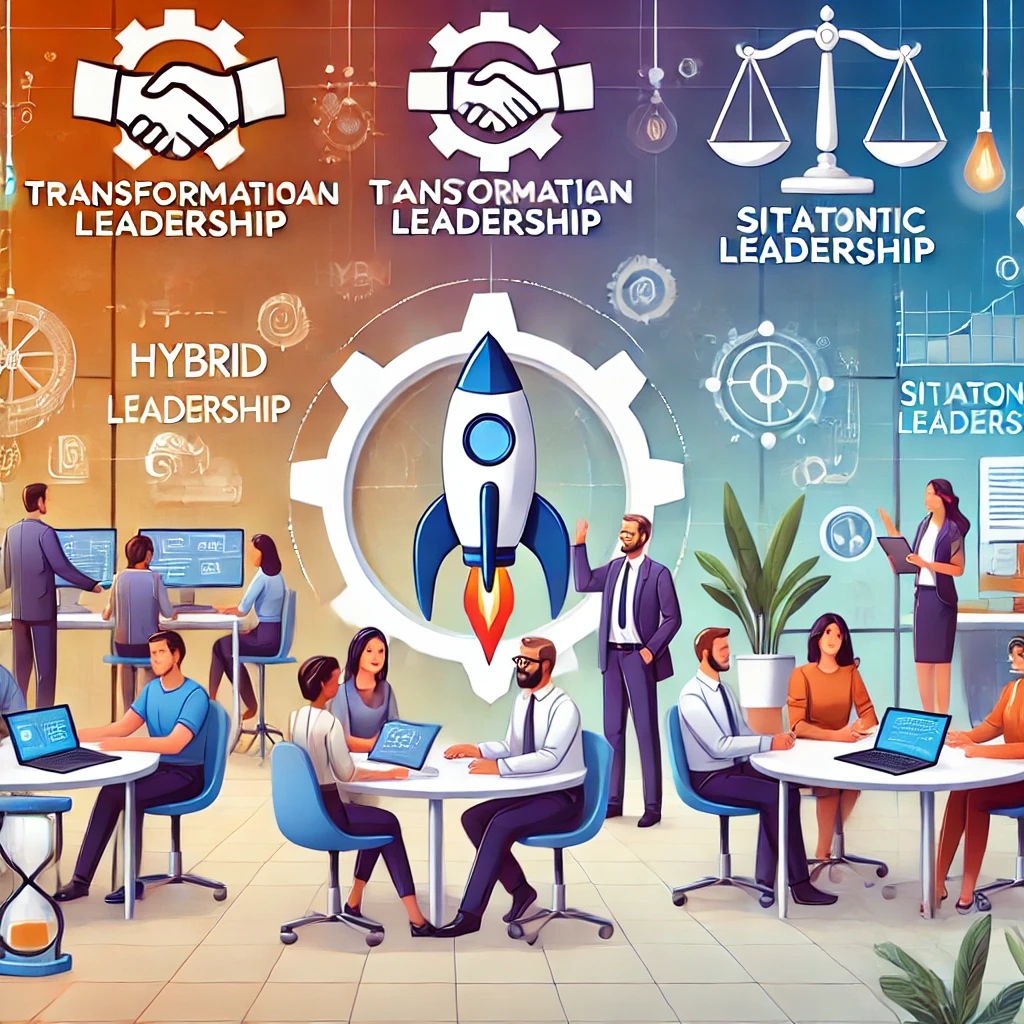
The landscape of software development is too dynamic for a "one-size-fits-all" management style. Recent insights, including those from Moldstud, suggest that 78% of software development professionals agree that hybrid leadership is essential for success in the industry.
Hybrid leadership isn't a single set of rules; it is a versatile approach that blends traditional and modern styles, allowing leaders to adapt quickly to changing circumstances, technical hurdles, and team needs.
🧩 The Styles of a Hybrid Leader
A great software engineering manager acts as a "chameleon," reading the room and the sprint board to decide which version of themselves the team needs most.
🚀 Transformational Leadership
This style is about the "Big Picture." It inspires team members to exceed their own perceived limitations and encourages the kind of innovation that creates market-disrupting products.
- Key Action: Articulating a compelling vision that connects daily coding tasks to the future of the product.
🤝 Servant Leadership
At its core, this style flips the traditional hierarchy. The leader's primary job is to serve the team by removing blockers and fostering a supportive environment.
- Key Action: Prioritizing team welfare and psychological safety to reduce turnover and burn-out.
🗳️ Democratic Leadership
In a field full of brilliant minds, the best solutions often come from the collective. Democratic leaders involve the team in the decision-making process.
- Key Action: Leveraging diverse perspectives during architectural reviews to increase collective ownership of the project.
🔄 Situational Leadership
No two engineers are at the same stage in their career. Situational leadership involves adjusting your level of oversight based on the individual and the task.
- Key Action: Providing high-touch guidance for juniors while offering total autonomy to seasoned seniors.
💻 Technical Leadership
In engineering, you cannot lead what you do not understand. A hybrid leader must bridge the gap between business requirements and technical feasibility.
- Key Action: Providing mentorship on complex technical issues and earning the team's respect through domain expertise.
Why Hybrid Leadership Wins in 2026
The software industry moves at the speed of light. By blending these styles, a leader creates an environment that:
- Fosters Innovation: Through transformational and democratic approaches.
- Maintains High Morale: Through servant and technical leadership.
- Drives Project Success: By applying situational leadership to navigate high-pressure phases.
The most effective leaders are those who don't just "manage"—they read the situation and the team dynamics, adjusting their style to provide exactly what is needed at any given moment.