
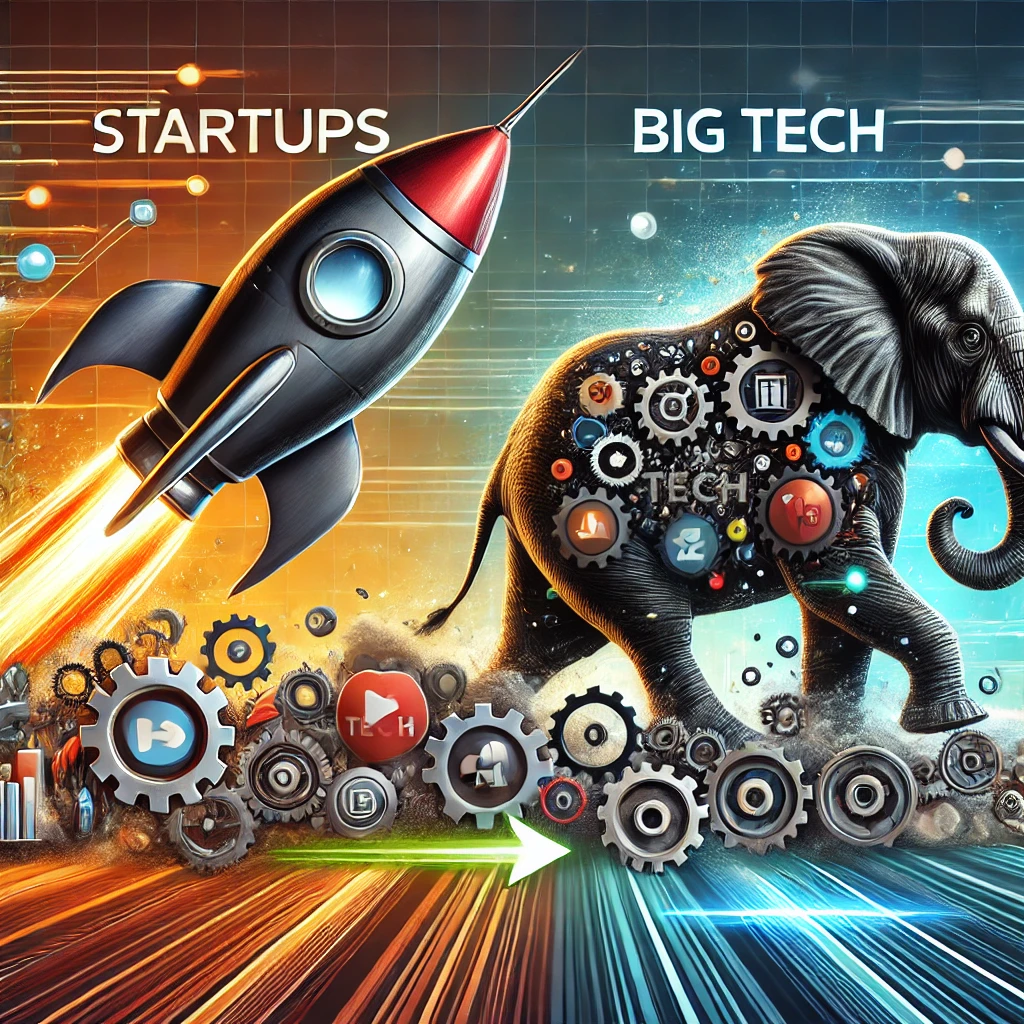
Startups are increasingly leaving Big Tech companies in the dust when it comes to innovation speed. While industry giants possess massive resources and global market reach, they often struggle with agility and rapid deployment. It seems like a paradox: why does more money often lead to slower results?
⚡ Startups: Built for Velocity
Startups operate with a "move fast and break things" DNA that prioritizes learning over perfect stability.
- Rapid Deployment: They can implement changes and deploy new features in hours or days, rather than weeks.
- Continuous Delivery: Small, autonomous teams often aim for multiple deployments per day.
- Pivoting Power: They can shift their entire product strategy overnight based on real-time market feedback.
🐘 The Big Tech Struggle
In contrast, many established tech giants struggle to achieve more than a few deployments per week. According to a study in the Strategic Management Journal, the primary drivers of groundbreaking innovation are often smaller players, while Big Tech focuses on incremental improvements.
Several factors contribute to this "corporate slowdown":
- Bureaucracy: Excessive layers of approval and slow decision-making processes.
- Risk Aversion: A culture that prioritizes system stability and brand protection over experimentation.
- Efficiency Focus: Optimizing existing products rather than seeking disruptive innovation.
- Legacy Weight: Dependence on existing, profitable business models that they are afraid to "cannibalize."
🔄 The ‘Corp-up’ Solution: Bridging the Gap
To combat this speed deficit, many large organizations are adopting the ‘Corp-up’ model. This hybrid approach seeks to create entrepreneurial units within the larger organization, effectively building "startups in a box."
🔑 Key features of the ‘Corp-up’ model:
- Autonomous Squads: Teams granted the flexibility to ignore standard corporate red tape.
- Rapid Prototyping: A focus on customer-centric innovation and getting an MVP (Minimum Viable Product) out the door quickly.
- Accelerated Decisions: Short-circuiting the usual committee-based approval process.
- Resource Advantage: Leveraging the parent company’s massive data, capital, and market reach to scale a proven idea instantly.
By implementing this hybrid model, Big Tech companies hope to reignite their innovation engines and keep pace with the startup world’s breakneck speed. In 2026, the companies that win aren't just the ones with the most developers—they are the ones who can deploy the fastest.