As a Software Engineering Manager, I’ve always been fascinated by the challenge of measuring developer productivity. I came across an insightful article that offered a fresh perspective on this complex topic.
The article, “Measuring Developer Productivity: Real-World Examples” by the Pragmatic Engineer, delves into how leading tech companies approach this challenge. (https://newsletter.pragmaticengineer.com/p/measuring-developer-productivity-bae)
Here are some key takeaways:
🎯 No Single Metric: There’s no one-size-fits-all solution. Companies like Google use a multi-dimensional approach, focusing on speed, ease, and quality.
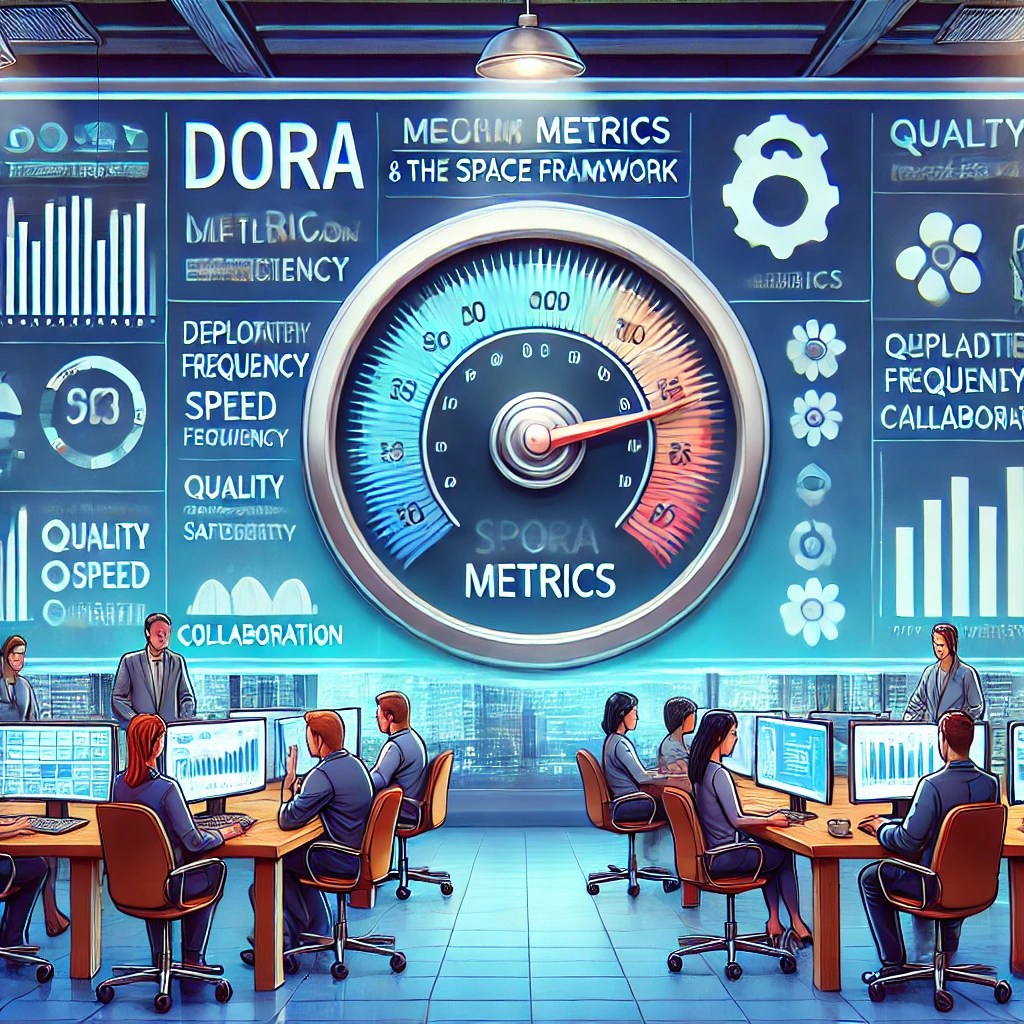
🔍 DORA Metrics: Many organizations use DORA (DevOps Research and Assessment) metrics, which include:
Deployment Frequency
Lead Time for Changes
Time to Restore Service
Change Failure Rate
💡 SPACE Framework: This developer-centric approach measures:
Satisfaction and Well-being
Performance
Activity
Communication and Collaboration
Efficiency and Flow
Read more about DORA and SPACE here: https://newsletter.pragmaticengineer.com/p/developer-productivity-a-new-framework
👥 Team vs. Individual: The focus is shifting from individual to team productivity, recognizing the collaborative nature of software development.
🌟 Developer Experience: Companies like Peloton are emphasizing developer satisfaction as a key indicator of productivity.
🔄 Balanced Approach: Successful measurement combines quantitative metrics with qualitative insights.
🚀 Continuous Improvement: The goal isn’t just measurement, but using these insights to enhance processes and tools.
In my experience, the most effective approach to measuring developer productivity involves:
• Tracking how many times a task didn’t pass testing certification
• Monitoring task completion time
• Assessing team commitment in each sprint
• Measuring code test coverage
• Evaluating the quality of delivered code

Discover more from Mind Refactor
Subscribe to get the latest posts sent to your email.
Mind Refactor

Exploring how technology reshapes our world 🌍 | Insights on Programming, Startups, Management & Leadership 🚀
Curious how technology is reshaping our world? 🚀
Dive into insights on Programming, Startups, Management & Leadership at Mind Refactor. Leave your email here.

Leave a comment